

Last Updated: November 14, 2026
Quick Summary
Christian journal prompts for finding hope pair a question with a Scripture verse, such as Romans 15:13, so you can respond honestly on paper. Writing slows the mind enough to notice where God is already working, even when circumstances have not changed. Over weeks, your entries build a record of God's faithfulness you can return to.
- Spend about ten minutes a day, following four steps: read, pray, respond, and revisit.
- Choose a prompt from a season you are facing, such as grief, waiting, or loneliness.
- Start with one-sentence entries or a letter to God on especially hard days.
- If you miss several days, pick up at today's date rather than restarting from page one.
- Journaling does not replace prayer, church community, or professional help when you need it.
Table of Contents
- Why Christian Journal Prompts Help You Find Hope
- How to Start a Prayer Journal for Hope
- Christian Journal Prompts for Finding Hope in Hard Seasons
- Bible Journal Prompts for Women Built on Scripture
- A Scripture Writing Plan for Hope
- Tools That Make Your Hope Journal Easier to Keep
- Writing Your First Hope Entry This Week
- Frequently Asked Questions
Why Christian Journal Prompts Help You Find Hope
Hope often gets crowded out by the noise of a hard season.
Journaling is a practical way to hold onto Scripture. A prompt pulls a single verse into view and asks you to respond honestly.
Journaling is not a cure-all, and it does not replace prayer, church community, or professional help when you need it. What it does offer is consistency.
How to Start a Prayer Journal for Hope
Start small. Choose one time each day, even ten minutes, and keep the journal where you will see it.
A Guided Routine You Can Follow in Ten Minutes
A repeatable structure removes the blank-page problem. This four-step routine works for a single entry and scales to a daily habit:
- Read. Open to one hope-centered passage and read it slowly, twice. Underline or copy one phrase that stands out.
- Pray. Write a short prayer in your own words, asking God to make the verse true in your life today.
- Respond. Answer one prompt from the sections above in three to five sentences. Keep it short enough to finish on a busy day.
- Revisit. Once a week, read back through the entries and note one pattern of God's faithfulness you can see in hindsight.
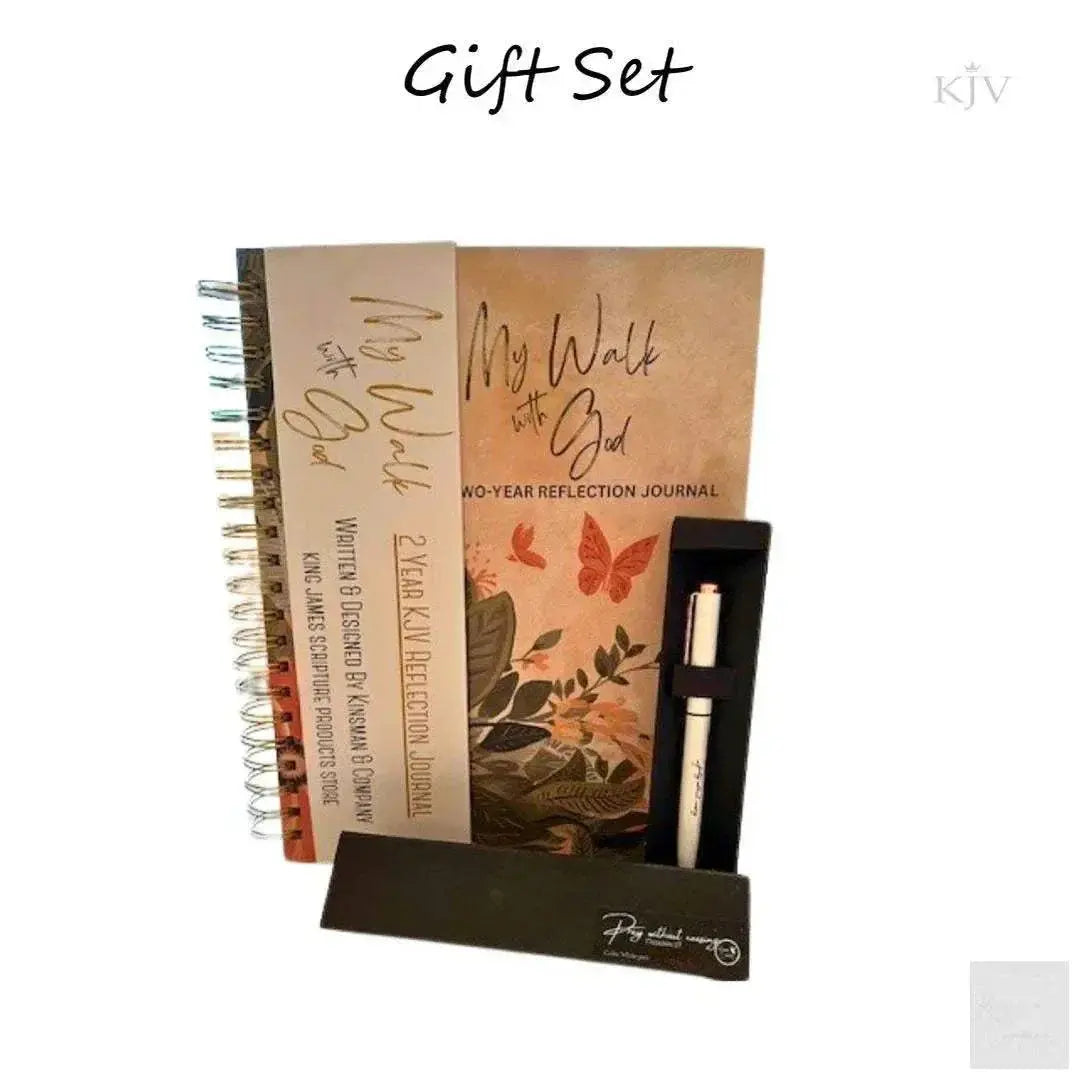
Our Walk with God Prayer Journal for Women includes sections for a Bible reading plan, a prayer list, and a grateful heart, so each morning has a clear starting point (Walk with God Prayer Journal for Women).
Low-Pressure Alternatives When You Feel Stuck
Not every reader is ready for a full page. These alternatives keep the practice alive on hard days:
- One-sentence entries. Write only the verse reference and one sentence about what it means to you. A single honest sentence still counts.
- Prayer journaling. Write your entry as a letter to God rather than a reflection. Many readers find this easier when they are angry, confused, or tired.
- Voice notes. Speak your reflection into a phone recorder and transcribe it later, or keep it as audio. This helps readers who process out loud or whose hands are busy.
Common Mistakes to Avoid
Writing too much at first is the most common reason readers quit by the second week. Aim for a few honest sentences rather than pages; the habit matters more than the length of any single entry.
Watch out: if you miss several days, do not restart the journal from page one. Pick up at today's date and keep going, the record of God's faithfulness is more valuable than a perfect streak.
Christian Journal Prompts for Finding Hope in Hard Seasons
Hard seasons do not follow a schedule, so these prompts work best when you return to them as needed. Each one pairs a question with a King James Version passage so your reflection stays anchored in Scripture rather than in the mood of the moment. Pick the season that fits your current situation, read the verse slowly, and answer in writing.
Prompts for Grief and Loss
Grief can make hope feel distant, and rushing toward a neat conclusion usually backfires. Write gently, and let the entries be as short or as long as the day allows.
- Psalm 34:18: "The LORD is nigh unto them that are of a broken heart; and saveth such as be of a contrite spirit." Name what you miss most, then write one sentence about where you have sensed God near to you this week.
- Revelation 21:4: "And God shall wipe away all tears from their eyes; and there shall be no more death, neither sorrow, nor crying." What part of that promise do you most long to see fulfilled?
- 1 Thessalonians 4:13: "But I would not have you to be ignorant, brethren, concerning them which are asleep, that ye sorrow not, even as others which have no hope." Write one honest prayer you have not yet said out loud to God.
Prompts for Uncertainty and Decisions
Uncertainty tempts you to rehearse worst-case scenarios. These prompts redirect that energy toward what God has already revealed.
- Proverbs 3:5-6: "Trust in the LORD with all thine heart; and lean not unto thine own understanding. In all thy ways acknowledge him, and he shall direct thy paths." Name the decision you are facing, then write what it would look like to acknowledge God in it today.
- James 1:5: "If any of you lack wisdom, let him ask of God, that giveth to all men liberally, and upbraideth not; and it shall be given him." What specific wisdom are you asking God for this week?
- Psalm 37:23: "The steps of a good man are ordered by the LORD: and he delighteth in his way." Where have you seen one small step ordered in the past month?
Prompts for Loneliness
Loneliness can distort the story you tell yourself about God's presence. Writing against that distortion is a practical act of faith.
- Deuteronomy 31:8: "And the LORD, he it is that doth go before thee; he will be with thee, he will not fail thee, neither forsake thee: fear not, neither be dismayed." Where in your day did you most need to remember that promise?
- Psalm 139:7-10: "Whither shall I go from thy spirit? or whither shall I flee from thy presence?" Write about one place you felt unseen this week, then name how God was present there.
- Hebrews 13:5: "I will never leave thee, nor forsake thee." What is one way you can reach out to another believer this week, and what holds you back?
Prompts for Waiting
Waiting is where hope is most often tested, because nothing visible changes. These prompts help you practice faithful waiting rather than passive waiting.
- Psalm 27:14: "Wait on the LORD: be of good courage, and he shall strengthen thine heart: wait, I say, on the LORD." What is one promise you are waiting to see fulfilled, and what would faithful waiting look like this week?
- Isaiah 40:31: "But they that wait upon the LORD shall renew their strength; they shall mount up with wings as eagles." Write down what it would mean for you to "wait upon the LORD" today, in concrete terms.
- Lamentations 3:25-26: "The LORD is good unto them that wait for him, to the soul that seeketh him. It is good that a man should both hope and quietly wait for the salvation of the LORD." Where have you seen God provide in a past season of waiting that you had almost forgotten?
Prompts for Discouragement
Discouragement is not a sign that hope has failed; it is often the point where honest writing does the most good.
- Psalm 42:5: "Why art thou cast down, O my soul? and why art thou disquieted in me? hope thou in God: for I shall yet praise him." Name what is troubling your soul, then write one sentence of hope in response.
- 2 Corinthians 4:8-9: "We are troubled on every side, yet not distressed; we are perplexed, but not in despair; persecuted, but not forsaken; cast down, but not destroyed." Which phrase describes you most accurately right now?
- Psalm 30:5: "Weeping may endure for a night, but joy cometh in the morning." Write about one night season you have come through, and what the morning looked like.
Watch out: if the distress you are writing about is persistent or severe, journaling is not a substitute for professional care.
The prompts below are grouped by the hard season you are facing, each paired with a King James verse to anchor your reflection.
| Season | Anchor verse | Prompt focus |
|---|---|---|
| Grief and loss | Psalm 34:18 | Where you have sensed God near this week |
| Uncertainty and decisions | Proverbs 3:5-6 | Acknowledging God in a current decision |
| Loneliness | Deuteronomy 31:8 | Where you most needed God's presence |
| Waiting | Psalm 27:14 | Faithful waiting in concrete terms |
| Discouragement | Psalm 42:5 | Naming what troubles your soul |
Bible Journal Prompts for Women Built on Scripture
Scripture-based prompts keep your reflections anchored in God's Word rather than in your feelings alone. Each prompt below pairs a question with a King James verse for you to read first.
- Lamentations 3:22-23: "It is of the LORD's mercies that we are not consumed, because his compassions fail not. They are new every morning." What mercy did you receive this week that you could easily overlook?
- Jeremiah 29:11: "For I know the thoughts that I think toward you, saith the LORD, thoughts of peace, and not of evil, to give you an expected end." What does an expected end look like to you right now?
- Romans 8:28: Write about one situation that seems to be working against you, then ask how God might be using it for good.
- Psalm 42:5: "Why art thou cast down, O my soul? and why art thou disquieted in me? hope thou in God." Name what is troubling your soul and write a sentence of hope in response.
A Scripture Writing Plan for Hope
A simple plan keeps your journaling focused across several weeks. Choose one hope-centered passage each week, read it every day, and write a short entry on a single phrase from it.
- Week 1: Romans 15:13. Write what joy and peace look like in your daily routine.
- Week 2: Psalm 42:11. Record one thing that happened this week that gave you reason to hope.
- Week 3: Lamentations 3:21-24. Note the mercies you see each morning.
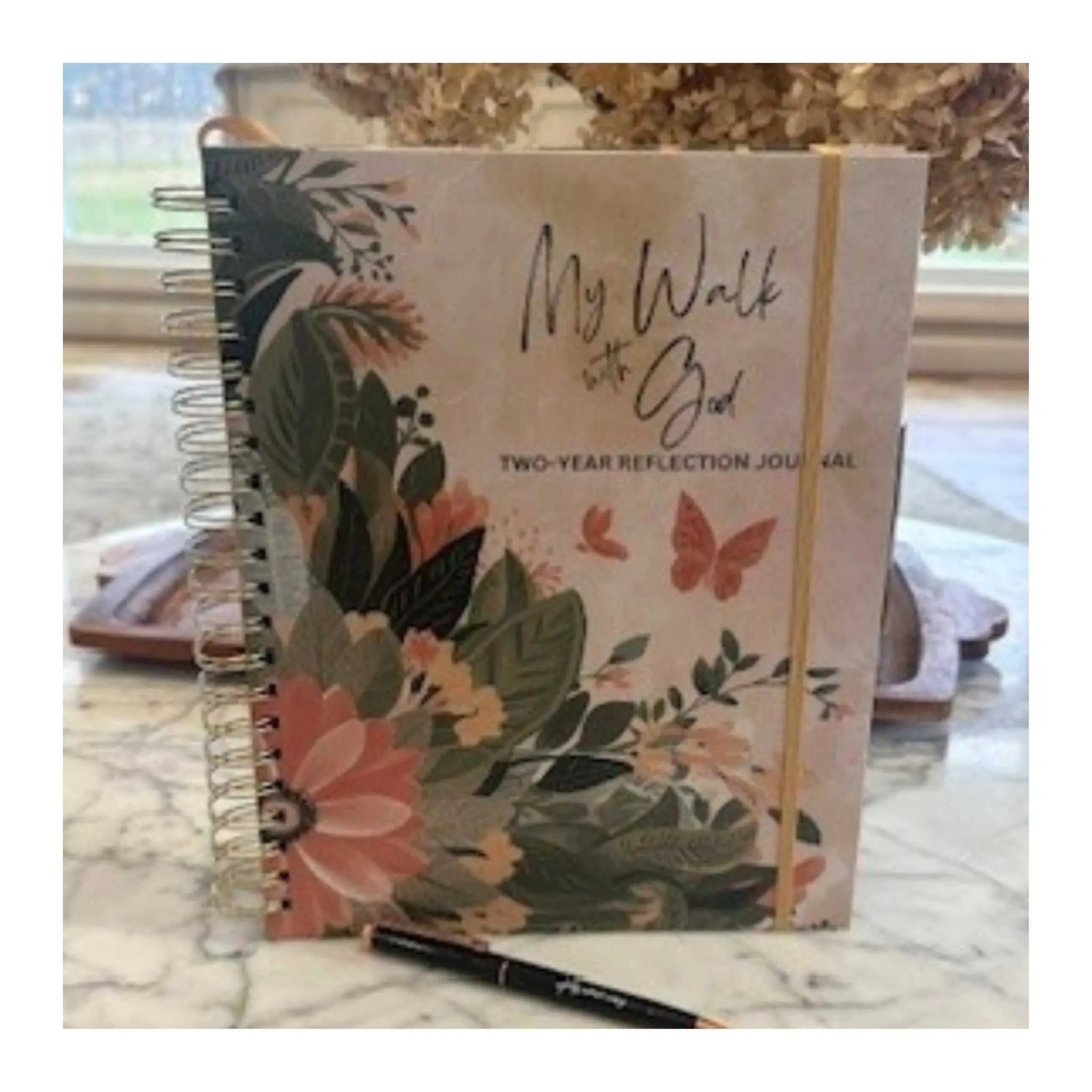
A spiritual growth journal with a two-year layout makes it easy to repeat this plan and compare your entries over time (Spiritual Growth Journal for Women).
Tools That Make Your Hope Journal Easier to Keep
The right tools make daily writing feel like a pleasure rather than a chore.
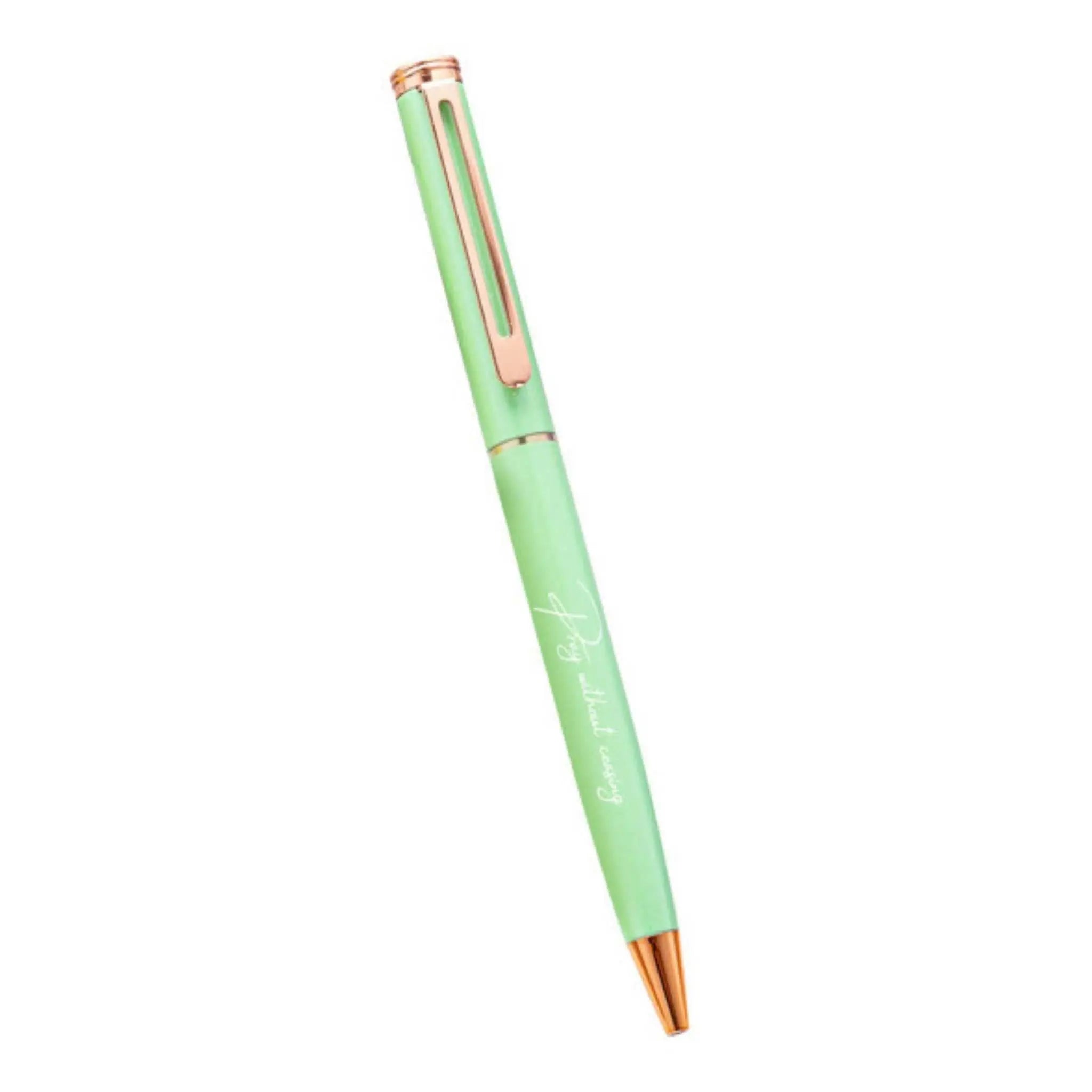
A scripture pen gives your daily entries a consistent look and keeps your devotional time distinct from other writing. The Bible Verse Pens for Her feature a lavender barrel and the verse "Pray Without Ceasing" from 1 Thessalonians 5:17 (Bible Verse Pens for Her).
For sermons and Bible study, a slim notebook keeps your notes in one place. Our Sermon Notes Notebook features a Wildflower design and Psalm 23:1-3 on the cover, and is slim enough to carry in a Bible case (Sermon Notes Notebook).
When choosing a journal, look for paper that lies flat, enough pages to last a year or more, and a layout that matches how you pray. Our guide on how to choose a scripture journal covers these points in more detail.
Highlighters also help. Marking a verse you return to often turns your Bible into a record of your own walk with God.
Writing Your First Hope Entry This Week
Set aside one quiet morning this week and open your journal. Write today's date, then read Romans 15:13 out loud. Ask God to fill you with hope, and write down the first thing that comes to mind.
Next, choose one prompt from the sections above and answer it in three to five sentences. Finish by naming one small step you will take tomorrow. Keep the entry short enough that you can complete it on a busy day.
Do not expect a dramatic change after one entry. Hope builds through repetition, and the pages you fill over months become a testament to what God has done.
Frequently Asked Questions
What is the 3-3-3 journaling method?
The 3-3-3 method asks you to write three things you are thankful for, three things you are struggling with, and three things you are hoping God will do. For a faith journal, pair each category with a King James verse, such as Psalm 42:11, Why art thou cast down, O my soul? and why art thou disquieted in me? hope thou in God. Writing in short, focused lists keeps the practice manageable on busy or heavy days. Many women find the structure makes it easier to begin when they do not know what to say to God. You can repeat the same three categories daily and watch how the entries shift over weeks.
What are some good prompts for a Christian journal?
Strong prompts ask you to name a specific fear, then set it beside a promise from Scripture. Try writing out Romans 15:13, Now the God of hope fill you with all joy and peace in believing, and then describe one place where you need that joy and peace today. Other useful prompts include: What is God showing me about His faithfulness this month? Which of His promises am I tempted to doubt? Where have I seen Him provide in the past? Keep a list of answers so you can return to them when discouragement returns.
How do I start a prayer journal for spiritual growth?
Choose a consistent time, such as early morning before the day begins, and set aside ten to fifteen minutes. Begin with a single verse, read it aloud, and write a short prayer in response. Record what you are asking God for, what you are thankful for, and what you notice Him doing over time. A dedicated journal, like the Spiritual Growth Journal for Women from Kinsman & Company priced at $34.99, can give you a clear layout with King James Scripture on each page. Start small and keep going even on days when your entries are brief.
Can journaling help with anxiety through a Christian lens?
Journaling can give anxious thoughts a place to land outside your head, which many people find calming. Through a Christian lens, the practice pairs honest naming of worry with Scripture that points to God's care, such as 1 Peter 5:7, Casting all your care upon him; for he careth for you. Write the worry, then write the verse, then write a prayer that brings the two together. Journaling supports prayer and reflection, but it does not replace professional care. If anxiety is persistent or overwhelming, speak with a qualified counselor or physician as well as your pastor.


